
Engagement Model for Software Development
Through a transparent approach to pricing and collaboration, teams can evaluate different engagement models, understand cost drivers, and select the structure that best fits their goals, scope, and long-term vision.
Engagement Models & Pricing: Finding the Right Fit
One of the first and most important questions for any custom software project is, “What will this cost?” Because every project is unique, the answer is not just a number.
The goal of this page is to provide a transparent look into how we approach project pricing and partnerships. A great partnership starts with a clear understanding of the collaboration model, which defines how our teams work together, manage risks, and drive your project to success. Here, we will break down the factors that influence your investment, the different ways we can structure our engagement, and our proven path to a predictable budget.

Transparency
Collaboration Model

Cost Clarity

Strategic Alignment
The Core Factors That Influence a Project’s Investment
The scope and complexity of your vision are the biggest drivers of the final cost. A professional estimate is the result of a detailed analysis of several key areas. Understanding these factors will help you understand the value embedded in a custom solution.
- Hardware & Firmware Complexity (for IoT/Embedded Projects): Is your project using off-the-shelf sensors, or does it require a custom-designed circuit board and enclosure? Custom hardware and the low-level firmware that runs on it require a specialized design, prototyping, and testing process.
- Software Complexity: This includes the web and mobile applications that users interact with. The number and complexity of features—such as user dashboards, real-time alerts, data analytics, and user management—are a primary driver of the development effort.
- Integration & Future-Readiness: A new software solution rarely lives on an island. The effort to integrate with existing enterprise systems (like your CRM or ERP) is a critical cost driver. Furthermore, the architectural complexity required to ensure the solution is flexible and “AI-ready”—designed to support future integration with emerging technologies—is a key factor in the overall investment and long-term value.
- Security & Compliance Requirements: Building a solution that requires adherence to specific industry standards (like HIPAA for healthcare) or advanced security protocols involves a more rigorous and detailed development and testing process.
Our Flexible Engagement Models
Choosing the right engagement model is not just a pricing decision — it’s a partnership strategy. The model defines how we collaborate, manage risks, and drive your project forward. Different models offer different balances of flexibility, predictability, and speed, so the right choice depends on your business priorities.
Below are the most common ways clients engage with Krasamo, explained in buyer-friendly terms.
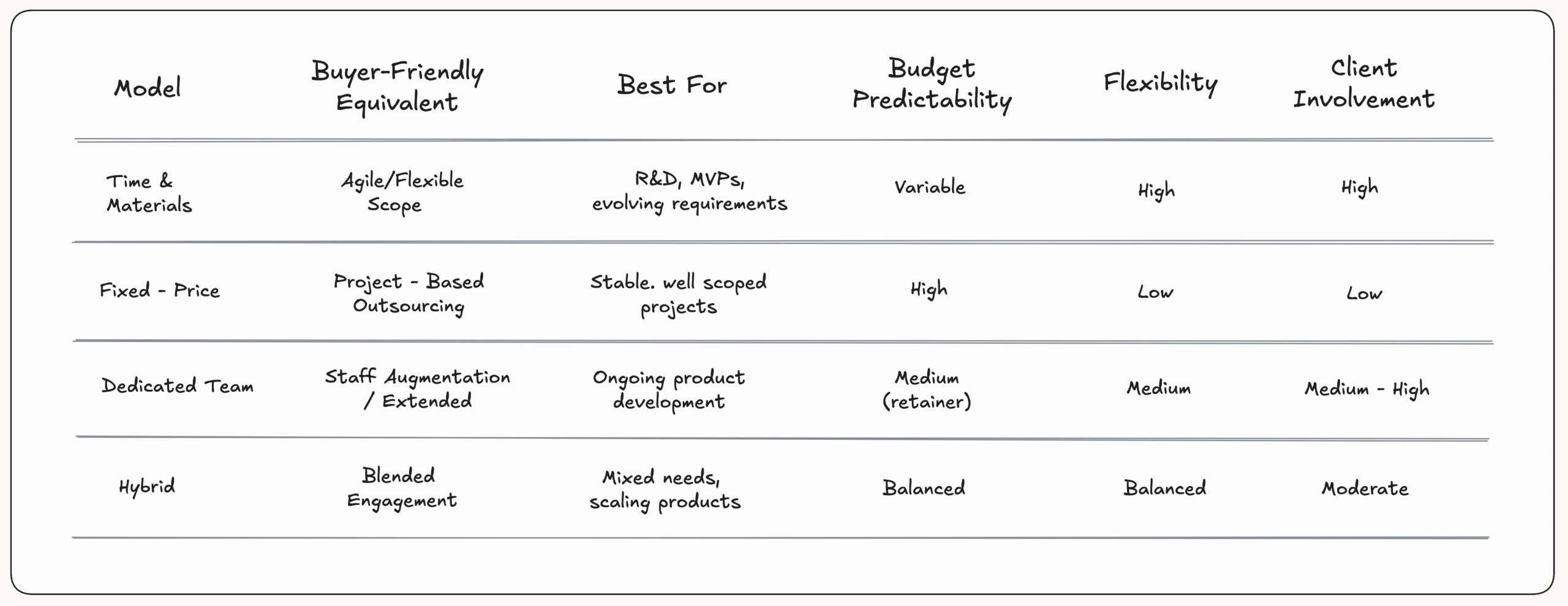
1. Time & Materials (T&M)
Also known as: Agile Development, Flexible Scope Projects
This model is built for adaptability. You pay for the actual time and expertise our team invests, giving you maximum flexibility to adjust scope and priorities as your project evolves.
Best for:
- Projects with evolving requirements
- R&D, prototyping, or MVPs where direction may change
- Companies testing new market opportunities
Pros
- Maximum scope flexibility
- Rapid adjustment to priorities and feedback
- Ideal for innovation and iterative development
Cons
- Budget can be variable
- Requires active client involvement
Outcome: Accelerates learning and reduces risk by letting you adapt in real time to business and user feedback.
2. Fixed-Price Projects
Also known as: Project-Based Outsourcing, Turnkey Solutions
This model provides budget predictability. We agree on a clearly defined scope, timeline, and price. It’s best suited when requirements are well-understood and unlikely to change.
Best for:
- Stable, well-documented requirements
- Internal stakeholders who demand fixed budgets
- Compliance-driven industries (healthcare, finance, etc.)
Pros
- Completely predictable budget
- Clearly defined scope & timeline
- Lower day-to-day client involvement
Cons
- Changes require renegotiation
- Less flexibility if needs evolve
Outcome: Delivers confidence for stakeholders and finance teams by providing a clear, upfront investment plan.
Ready to Start Building Your Project?
If you are ready to move forward, let’s begin the conversation. Schedule your free, no-obligation Discovery Call to discuss how our process can help you achieve your project’s goals.
3. Dedicated Team
Also known as: Staff Augmentation, Dedicated Development Teams, Extended Team Model
This model provides a long-term extension of your in-house team. A dedicated group of Krasamo experts integrates deeply into your processes, tools, and culture.
Best for:
- Long-term digital products or platforms
- Companies needing specialized skills at scale
- Businesses seeking to augment in-house capacity
Pros
- Deep integration and knowledge continuity
- Full control over priorities & workflow
- Strong long-term alignment with your business
Cons
- Higher long-term financial commitment
- Requires active client-side management
Outcome: Builds institutional knowledge and delivers ongoing innovation — your extended team evolves with your business.
4. Hybrid Model
Also known as: Blended Engagement
Many successful projects combine models. For example:
- Start with a Fixed-Price discovery phase to define your MVP.
- Transition into a Time & Materials model for agile, iterative development.
- Scale with a Dedicated Team for ongoing product growth.
Best for:
- Organizations needing both predictability and flexibility
- Long-term digital transformation roadmaps
- Startups scaling into enterprise-grade products
Outcome: Gives you the best of both worlds — stability where you need it, agility where you want it.
Engagement Model Comparison at a Glance
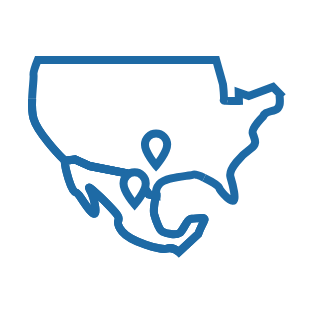
Nearshore Mexico Delivery
Krasamo’s Nearshore Mexico Delivery gives U.S. teams a fast, practical way to combine close collaboration with cost efficiency.
Why it works
- Same-time-zone collaboration: real-time meetings, faster feedback cycles, and fewer coordination delays.
- Cultural fit: clear communication and business norms that reduce friction and speed decisions.
- Easy proximity: short flights for on-site workshops and face-to-face alignment when needed.
- High-caliber talent: experienced engineers with deep skills in IoT, AI, and custom software.
- Cost-effective: more economical than U.S. onshore delivery while maintaining transparency and quality.
When to choose Nearshore
- You want a long-term partner that works closely with your team.
- You’re running fast-iteration innovation programs.
- Your project needs tighter oversight or operates in regulated industries.
The Krasamo difference
Nearshoring in Mexico can be applied to the engagement model that fits your goals — whether that’s a dedicated team, project delivery, or an iterative T&M approach. It’s how we deliver speed, trust, and value without the trade-offs.

Doing Business with Krasamo

Discovery
Process

Models
Management
Architecture
Kickoff
Maintenance

Requirements
& Vendor Indep


Documentation
Control
Software Cost
Work

Assurance
Formation

Analysis
Process
Work
& Vendor Indep
Management
Documentation
Kickoff
Analysis
Software Cost
Requirements
Models
Assurance
Architecture
Formation
Control
Maintenance